2026 "Doughnut Economics" Summer Workshop 3: Global City Cases and Group Presentations
On July 12, 2026, the 2026 "Doughnut Economics" Summer Workshop, organised by the Shao Qinglong Research Group of the School of Ecology at Sun Yat‑sen University under the EU Jean Monnet Project, entered its third day at Sun Yat‑sen University’s Shenzhen Campus.
The day’s activities included case studies on global urban Doughnut practices, group research presentations, and a closing ceremony with a group photo. The content covered international city cases such as Amsterdam and Brussels, diverse applications of Doughnut Economics in urban governance, and the participants’ learning outcomes.
01 Urban Experiments in Doughnut Economics: From Amsterdam to Global City Governance
In the morning, three outstanding student representatives – He Jiankun, Huang Shuoying, and Yang Mingdu – shared and discussed case studies under the theme "Urban Experiments in Doughnut Economics: From Amsterdam to Global City Governance".
First, He Jiankun gave a presentation entitled "Urban Experiments in Doughnut Economics: From Amsterdam to Global City Governance". He began with the evolution of Doughnut Economics, systematically outlining its development from the 2009 proposal of the planetary boundaries framework, to the first introduction of the concept in 2012, its theoretical systematisation in 2017, and the establishment of DEAL (Doughnut Economics Action Lab) which has driven local implementation. He then focused on methodological tools for translating the global Doughnut framework to the city scale: DEAL’s "Doughnut Unrolled" framework uses a three‑step approach – "drill down, divide, and fill" – to progressively localise the global Doughnut. Building on this, the "Four Lenses" provide a problem‑framing tool, guiding cities to examine themselves from four perspectives: local social aspirations, local ecological dependence, global social impact, and global ecological footprint. The "Portrait of Place" then translates the issues into a local diagnosis, providing a basis for policy, budgeting, procurement, spatial planning, and community action. Finally, he reviewed the overall landscape in which more than 30 cities and regions worldwide have formally engaged in Doughnut‑related practices, grouping them into three types: "institution‑led" (represented by Amsterdam and Brussels), which transform the Doughnut from concept into formal governance tools; "technocratic‑governance" (represented by Barcelona and Greater Geneva), which implement policies through indicator systems; and "grassroots‑experimental" (represented by Leeds and Cornwall), which emphasise public participation and social learning.
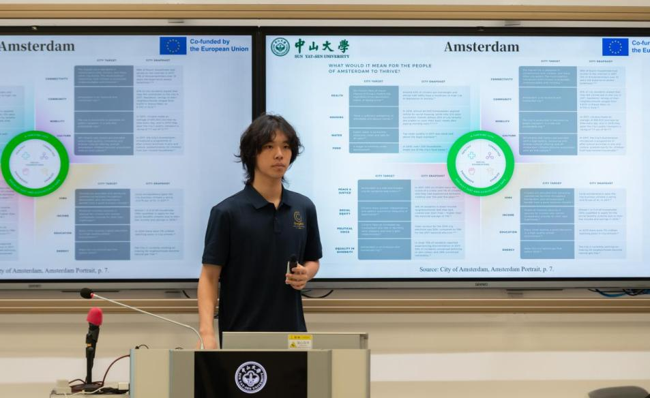
He Jiankun presenting
Yang Mingdu then shared the Oxfordshire Doughnut practice. Oxfordshire is a significant representative of the "grassroots‑experimental" type in the UK. The region faces multiple overlapping challenges including housing shortages, income inequality, declining rural services, and ecological degradation. Local government, community organisations, and academic institutions in Oxfordshire jointly launched the "Oxfordshire Doughnut Project", which is community‑based and uses participatory workshops and local data collection to draw a "Portrait of Place" for the county. The project places particular emphasis on resource flows between urban and rural areas and social equity, turning the Doughnut framework into a community‑level decision‑making tool for assessing the impact of local development projects on residents’ basic needs and the ecological environment. Yang Mingdu highlighted how Oxfordshire uses Doughnut thinking to promote a "just transition" – addressing climate change while ensuring that vulnerable groups are not left behind, for example through community energy cooperatives, green skills training, and social housing improvements, thereby closely integrating ecological goals with social inclusion. Oxfordshire’s practice shows that even without the administrative resources of a large city, grassroots communities can still use the Doughnut framework to build consensus and guide action, offering a useful reference for rural and peri‑urban areas.
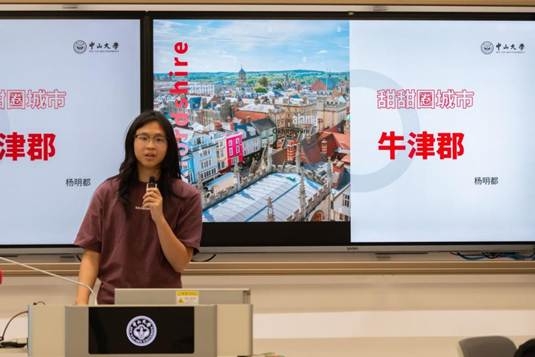
Yang Mingdu presenting
Huang Shuoying then gave a detailed report focusing on the Barcelona case. Barcelona is a typical representative of the "technocratic‑governance" approach. The city has developed a refined urban Doughnut indicator system that quantifies social foundations (such as housing affordability, accessibility of public space, and employment quality) and ecological ceilings (such as energy consumption, waste generation, and biodiversity) into actionable policy targets. The Barcelona City Council, in collaboration with local research institutions, uses an urban data platform to monitor performance in real time across various dimensions, and embeds Doughnut indicators into planning, budget allocation, and public procurement processes. Notably, Barcelona has integrated the Doughnut framework with urban renewal projects, such as the Superilles (superblocks) transformation, where both social well‑being and ecological footprint impacts are assessed simultaneously, exploring a data‑driven, precision‑oriented governance pathway. Huang Shuoying also described how Barcelona fosters cross‑sectoral collaboration and citizen participation to transform the Doughnut concept from a technical tool into a city‑wide consensus, offering a replicable technical blueprint for other cities.
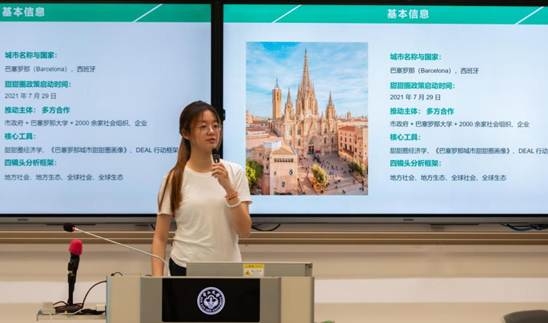
Huang Shuoying presenting
Through the presentations of the three students, participants not only gained a systematic understanding of the methodological tools for translating Doughnut Economics from theory to urban applications, but also delved deeply into Barcelona’s technocratic governance path and Oxfordshire’s grassroots experimental experience, further broadening their comprehension of the diverse urban applications of Doughnut Economics. During the session, participants also engaged in lively discussions on the applicability and challenges of Doughnut Economics in Chinese urban governance.
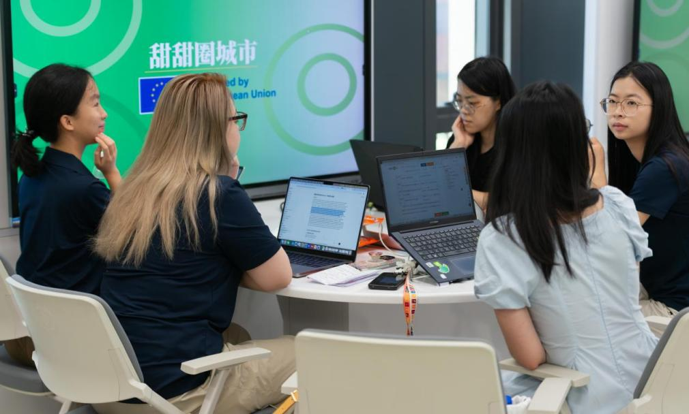
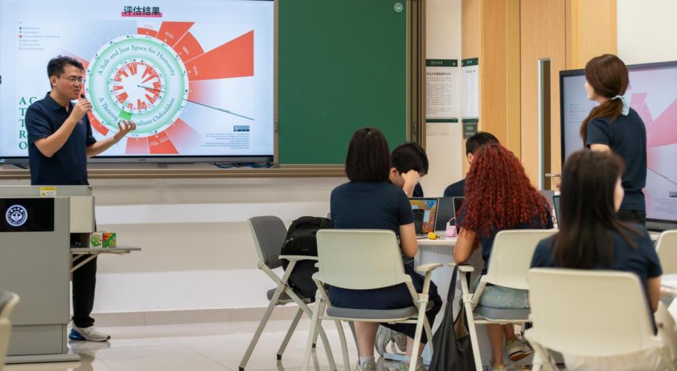
Participant interactions and discussions
02 Group Presentations
In the afternoon, each group presented their research findings based on the workshop’s learning content.
Following the previous two days of thematic lectures – covering the theoretical foundations of Doughnut Economics, case studies of Shenzhen and Hong Kong, ecosystem services, and international trade – the groups drew on their own research directions to explore applications of the Doughnut Economics framework in sustainable development from various angles.
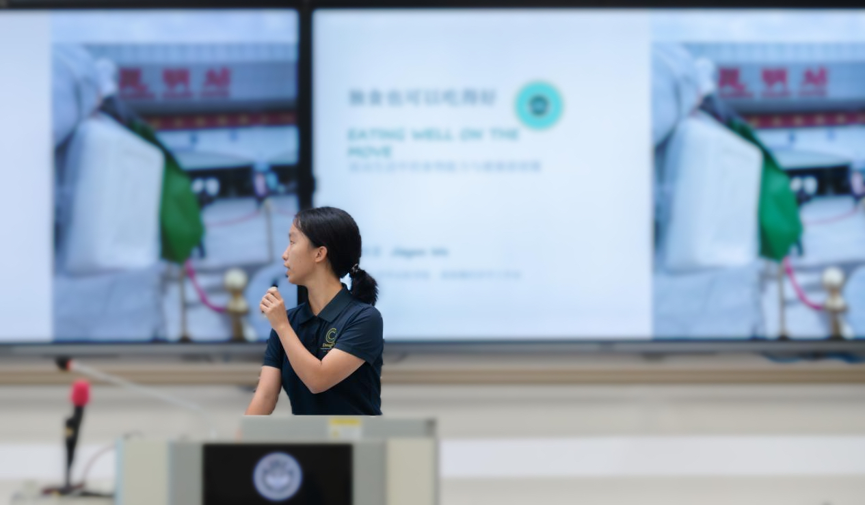
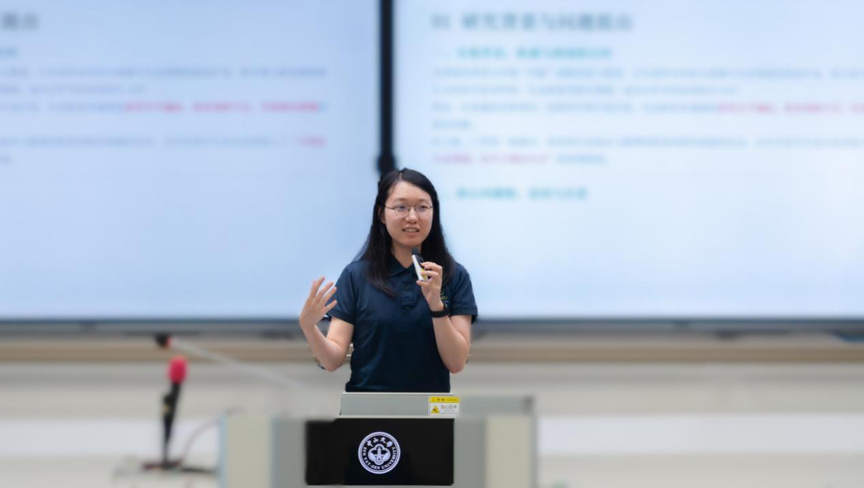
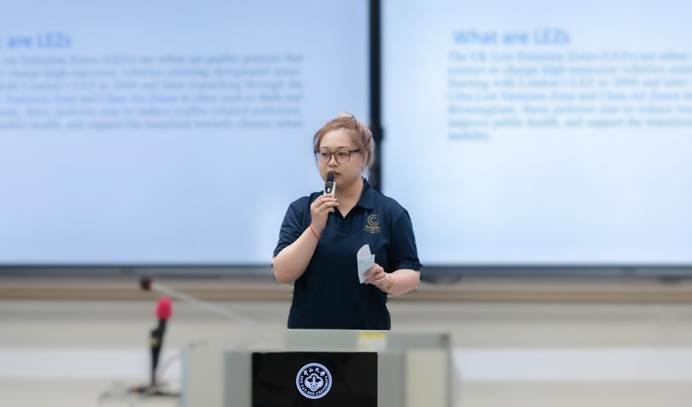
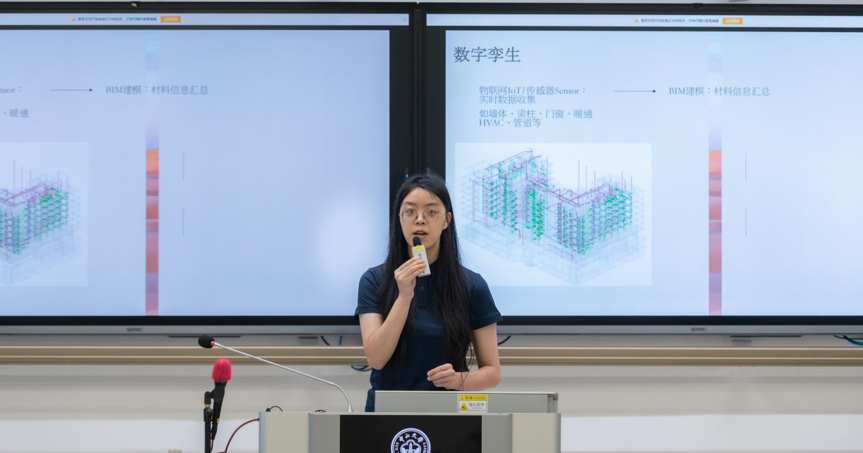

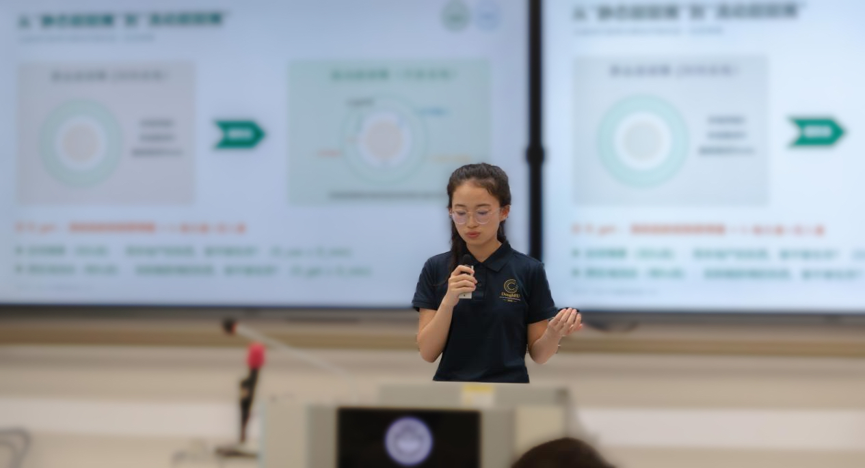

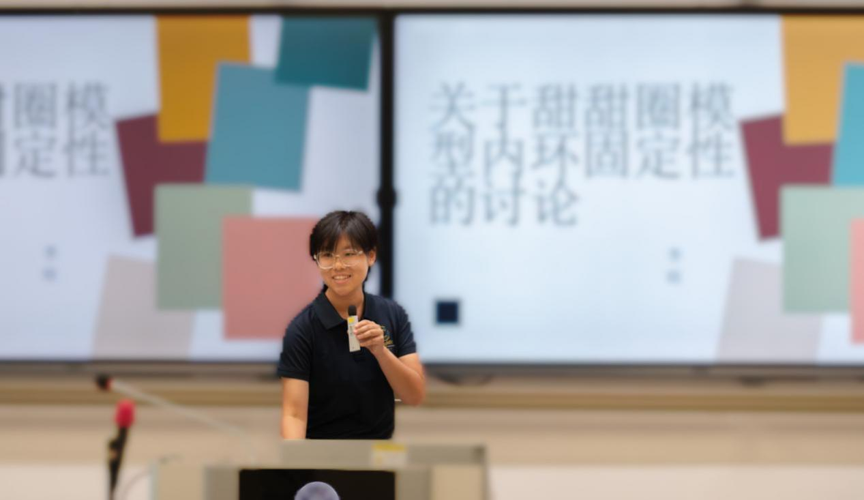
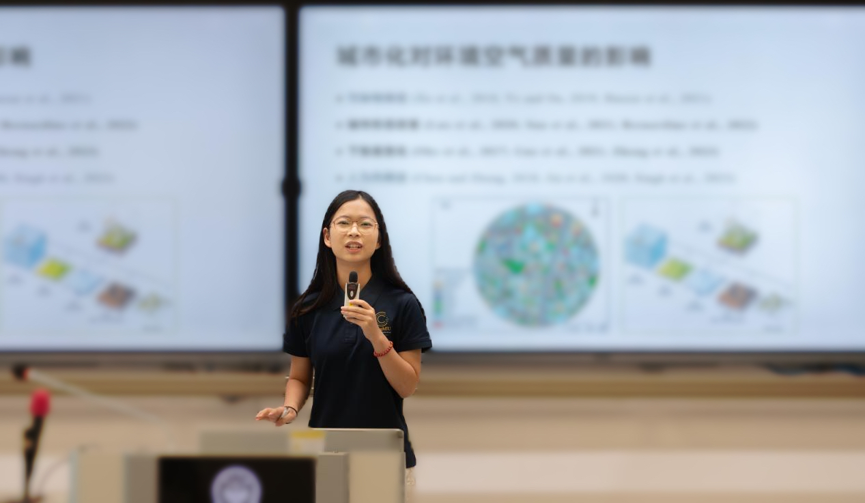
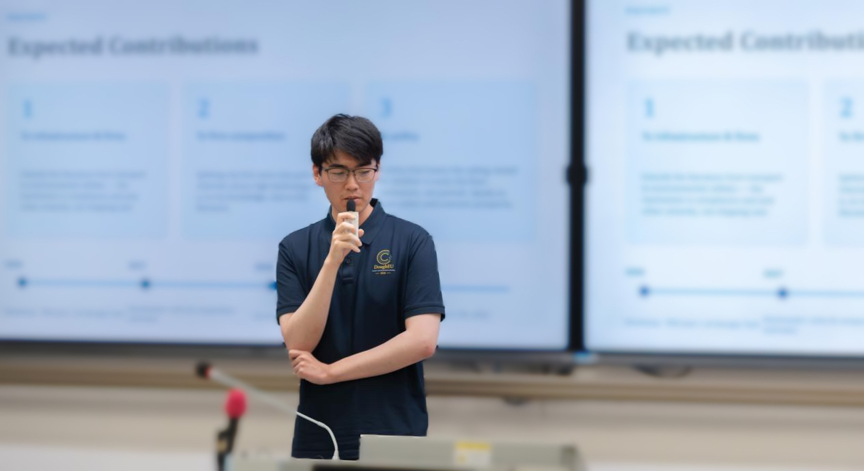
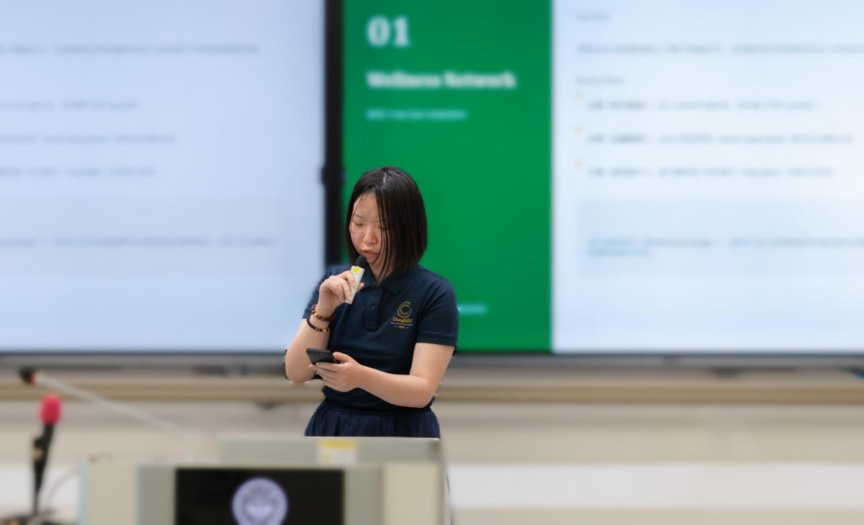

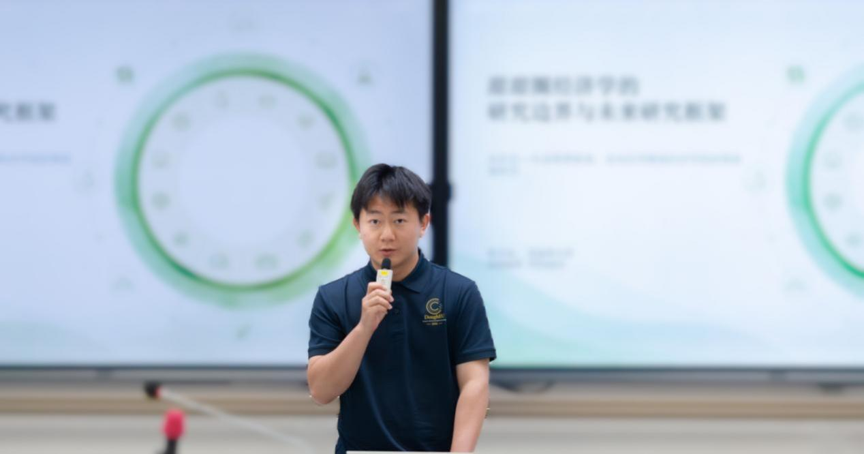
Group members presenting their outcomes
03 Closing Ceremony and Group Photo
After the group presentations, a closing ceremony was held. Associate Professor Shao Qinglong delivered a summary and review of the workshop, acknowledging the participants’ active engagement and deep reflection during the five‑day programme, and encouraging everyone to apply the concepts of Doughnut Economics to their future research and practice.
Subsequently, the organisers awarded certificates of completion to all participants who successfully finished the workshop. All participants, dressed in the workshop’s cultural T‑shirts, gathered for a group photo at Sun Yat‑sen University’s Shenzhen Campus.
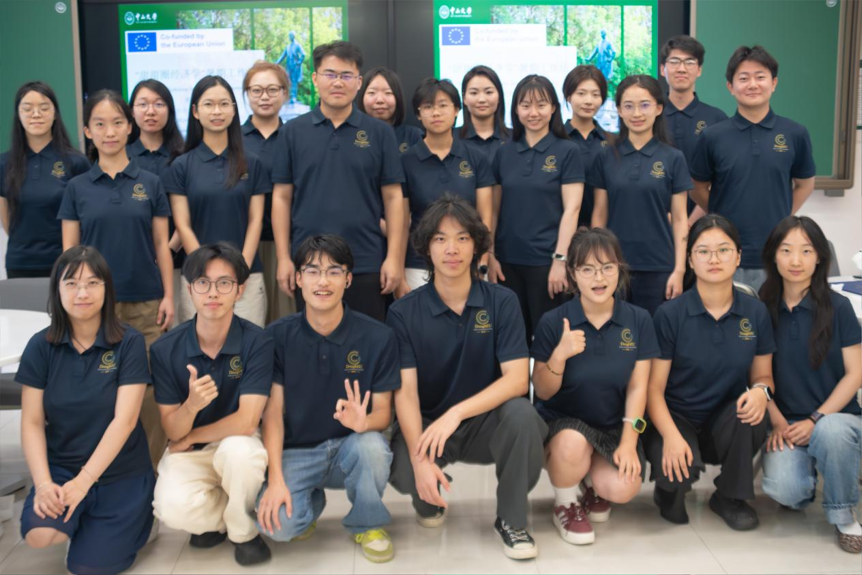
Group photo
04 Day 3 Summary
The activities on July 12 moved from global urban Doughnut case studies to the participants’ own presentations and concluding exchanges.
The morning case studies enabled participants to understand how cities such as Amsterdam have transformed Doughnut Economics from theory into governance practice, as well as the diverse exploratory pathways of Doughnut cities worldwide. The afternoon group presentations demonstrated the participants’ comprehension and application of the Doughnut Economics framework, and the closing ceremony brought the workshop to a successful conclusion.
05 Preview of Tomorrow
On July 13, the workshop will move to the urban site‑visit phase. In the morning, participants will visit enterprises in Shenzhen to understand the relationship between corporate innovation, technological development, and urban sustainable transition. In the afternoon, they will conduct an urban observation and practical visit to the Shenzhen Bay Park area, with a focus on public space development, green infrastructure, and urban renewal practices. Participants are reminded to take sun protection, rain gear, and hydration measures according to the weather, and to comply with on‑site visit protocols and safety requirements.