2026 "Doughnut Economics" Summer Workshop 4: Urban Practice and Public Science Engagement
On July 13, 2026, the 2026 "Doughnut Economics" Summer Workshop, organised by the Shao Qinglong Research Group of the School of Ecology at Sun Yat‑sen University under the EU Jean Monnet Project, entered its fourth day. On this day, the workshop moved from the classroom to the city, conducting two practical activities around corporate innovation visits in Shenzhen and public science outreach and interviews at Shenzhen Book City. These activities allowed participants to experience the urban application of the Doughnut Economics framework in real‑world settings, and to re‑examine the core concept of a "safe and just space" from the perspective of the general public.
01 Visiting BYD: Observing Green Manufacturing in Urban Practice
In the morning, participants travelled together by coach to BYD’s global headquarters for a site visit. As a benchmark enterprise in Shenzhen’s green manufacturing sector, BYD’s practices in new energy and sustainable development provided participants with a vivid example of how a company can balance economic efficiency and ecological boundaries. Participants toured production workshops and exhibition centres, gaining an intuitive understanding of how green smart manufacturing and circular economy concepts are implemented in actual production operations.
For many participants, this was their first time visiting the production floor of a Chinese new‑energy company. A participant from the University of California, Berkeley, commented: "In class, discussions about ecological ceilings and resource consumption often stay at the macro‑data level. Today, seeing how a company reduces actual carbon emissions through process improvements and clean‑energy substitution makes the theory tangible and concrete." Participants engaged in in‑depth exchanges with company representatives and faculty mentors on topics such as green supply chain management and product life‑cycle carbon footprint accounting, cross‑referencing the concepts of ecosystem services, international trade, and consumption‑based responsibility learned in previous sessions with the company’s actual operational logic.
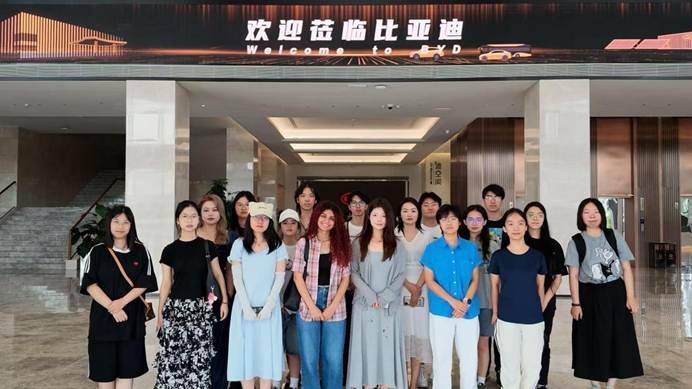
Participants visiting BYD’s global headquarters
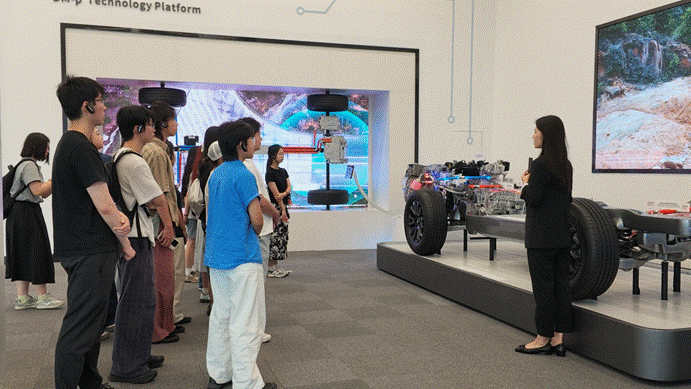
Participants discussing green manufacturing with faculty mentors
02 Doughnut City Outreach: From Book City to the Streets
In the afternoon, the workshop moved to Shenzhen Book City for a distinctive public science outreach and street‑interview activity on Doughnut cities. Located on the central north‑south axis of the Futian CBD, Shenzhen Book City is an important urban cultural landmark and public space, integrating reading, cultural experiences, and community connection.
Led by student representative Yang Ruyi, workshop participants formed groups of three to conduct Doughnut Economics outreach and random interviews with citizens at the Book City and surrounding public spaces. Each group introduced the basic concepts of Doughnut Economics – meeting essential social needs while keeping human activities within the ecological carrying capacity – in an accessible manner, and invited citizens to share their views on Shenzhen’s urban sustainable development, green lifestyles, public services, and the ecological environment.
The participants demonstrated excellent communication skills and teamwork during the outreach interviews. Some groups distilled Doughnut Economics into the vivid phrase "ensuring a good life for everyone without overdrawing the planet," quickly bridging the gap with interviewees. Others anchored conversations in citizens’ daily experiences such as park development, waste sorting, and green commuting in Shenzhen, grounding the theory in concrete life scenarios. A participant from Nanjing University reflected: "The process of explaining the Doughnut to the public is also a test of whether I truly understand the theory myself. Many questions raised by citizens – such as 'how do we prioritise these goals' and 'what can individuals do' – prompted me to rethink the framework from different angles."
During the interviews, citizens expressed positive feelings about Shenzhen’s recent environmental improvements, the popularity of green transport, and the enhancement of urban public spaces, while also raising concerns about housing affordability and air quality. By comparing citizens’ real voices with the Doughnut Economics theoretical framework, participants further grasped the process and challenges of translating academic language into public discourse.

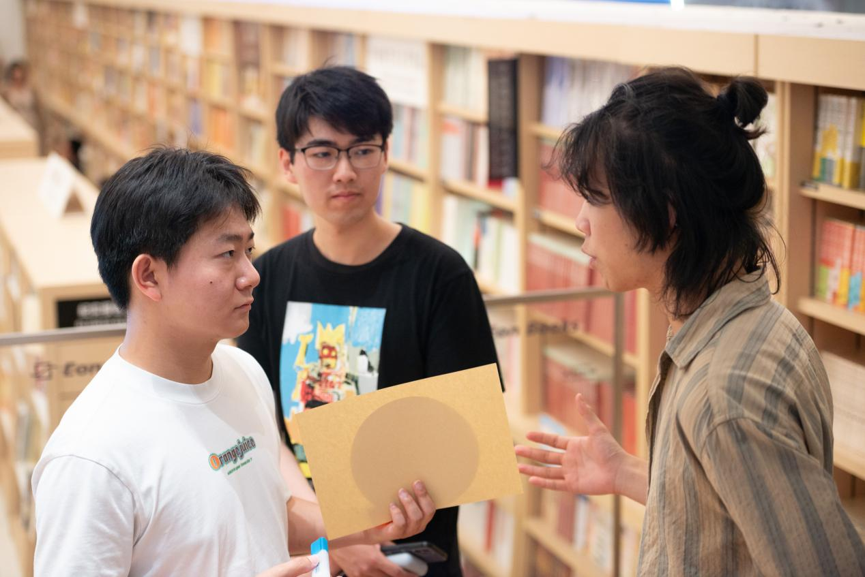
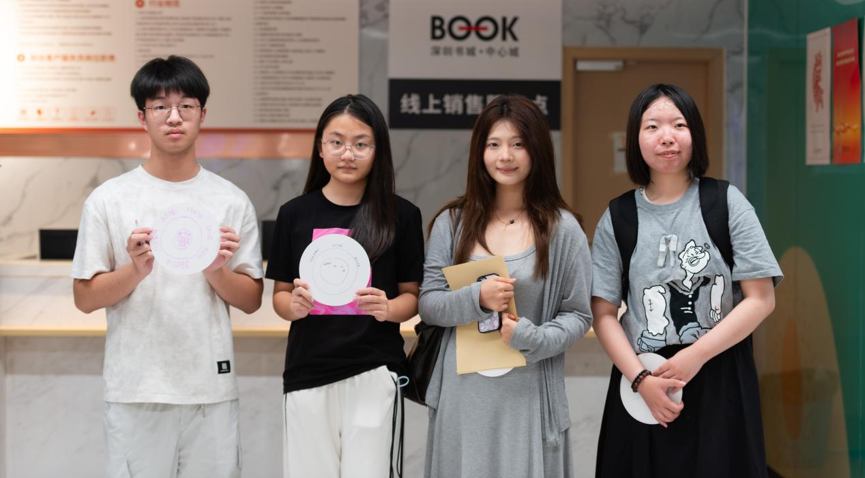


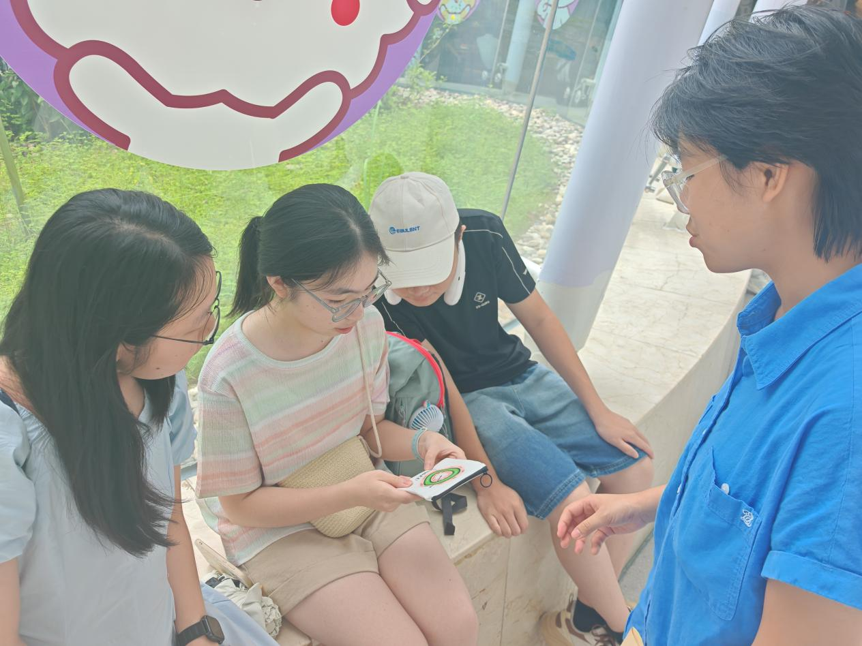
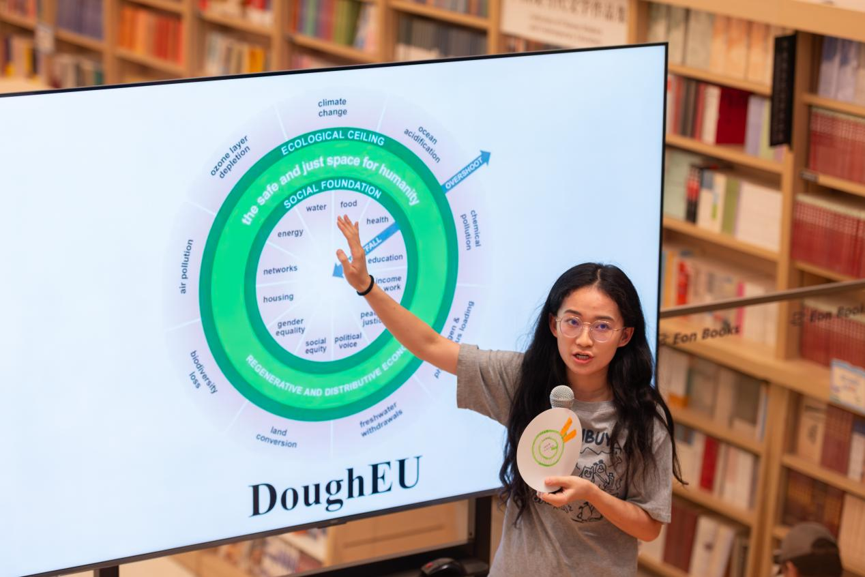

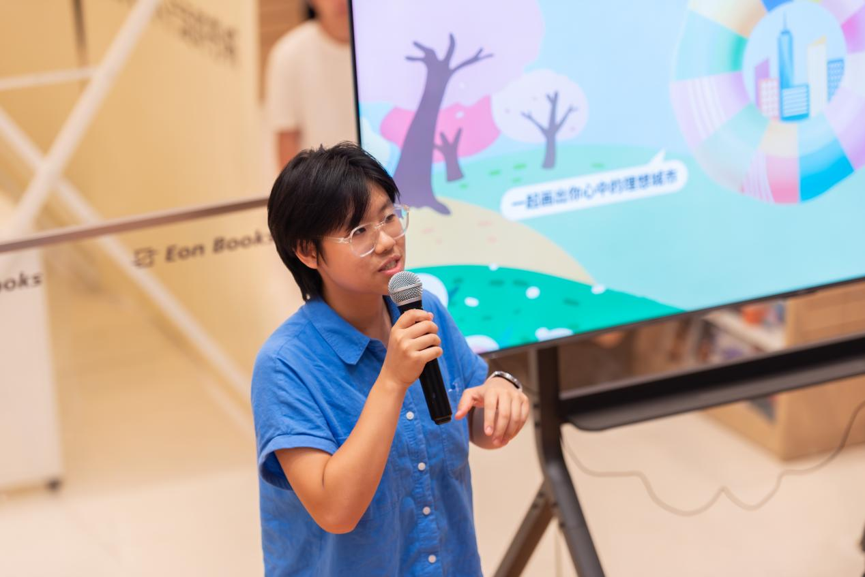

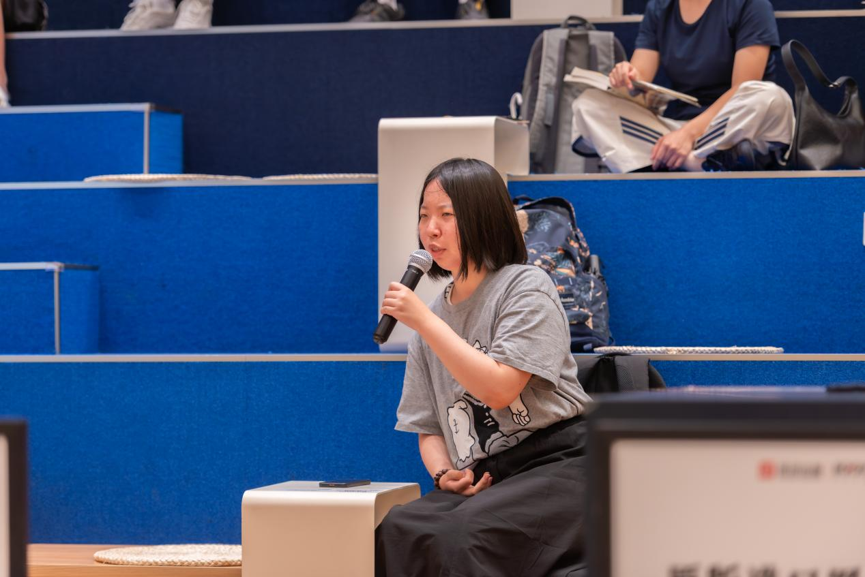
Participants conducting Doughnut city outreach and street interviews at Shenzhen Book City
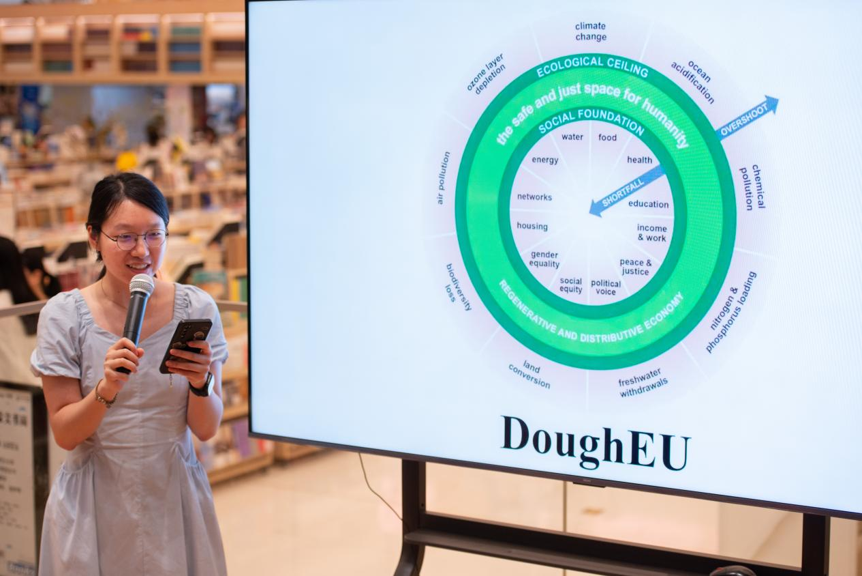
Yang Ruyi hosting the outreach and interview activity
03 Day 4 Summary
The practical sessions on July 13 provided participants with direct experience in applying the theoretical framework of Doughnut Economics to real‑world contexts, through both corporate innovation and public engagement. The morning visit to BYD showed participants how green manufacturing responds to ecological boundary issues in actual production operations. The afternoon outreach at Shenzhen Book City and street interviews took participants out of the academic setting to engage with citizens’ real perceptions and expectations regarding urban sustainable development. More importantly, during the process of explaining the Doughnut to the public, participants not only honed their ability to translate complex theories into everyday language but also re‑examined the meaning and tensions of Doughnut Economics from different groups and perspectives through dialogue with citizens. The interplay between theory and practice, and the conversation between academia and the public, further deepened participants’ understanding of the core concept of a "safe and just space" in Doughnut Economics.
04 Workshop Concludes Successfully
On July 14, as participants checked out and departed, the 2026 "Doughnut Economics" Summer Workshop came to a successful close at Sun Yat‑sen University’s Shenzhen Campus.
Over the five‑day programme, participants engaged in systematic and in‑depth learning and exchange on the theoretical foundations and urban applications of Doughnut Economics through thematic lectures, urban case analyses, group discussions, practical site visits, and public outreach activities. We extend our sincere gratitude to all participants for their active involvement, and to all the faculty and staff who contributed their hard work to make this workshop possible. We hope that the ideas of Doughnut Economics will take root and flourish in more people’s research and practice, contributing wisdom and strength to a sustainable future.
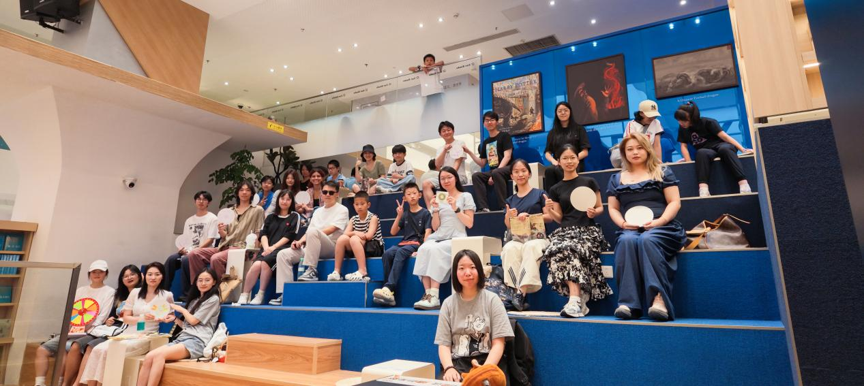
Group photo of the workshop team at Shenzhen Book City